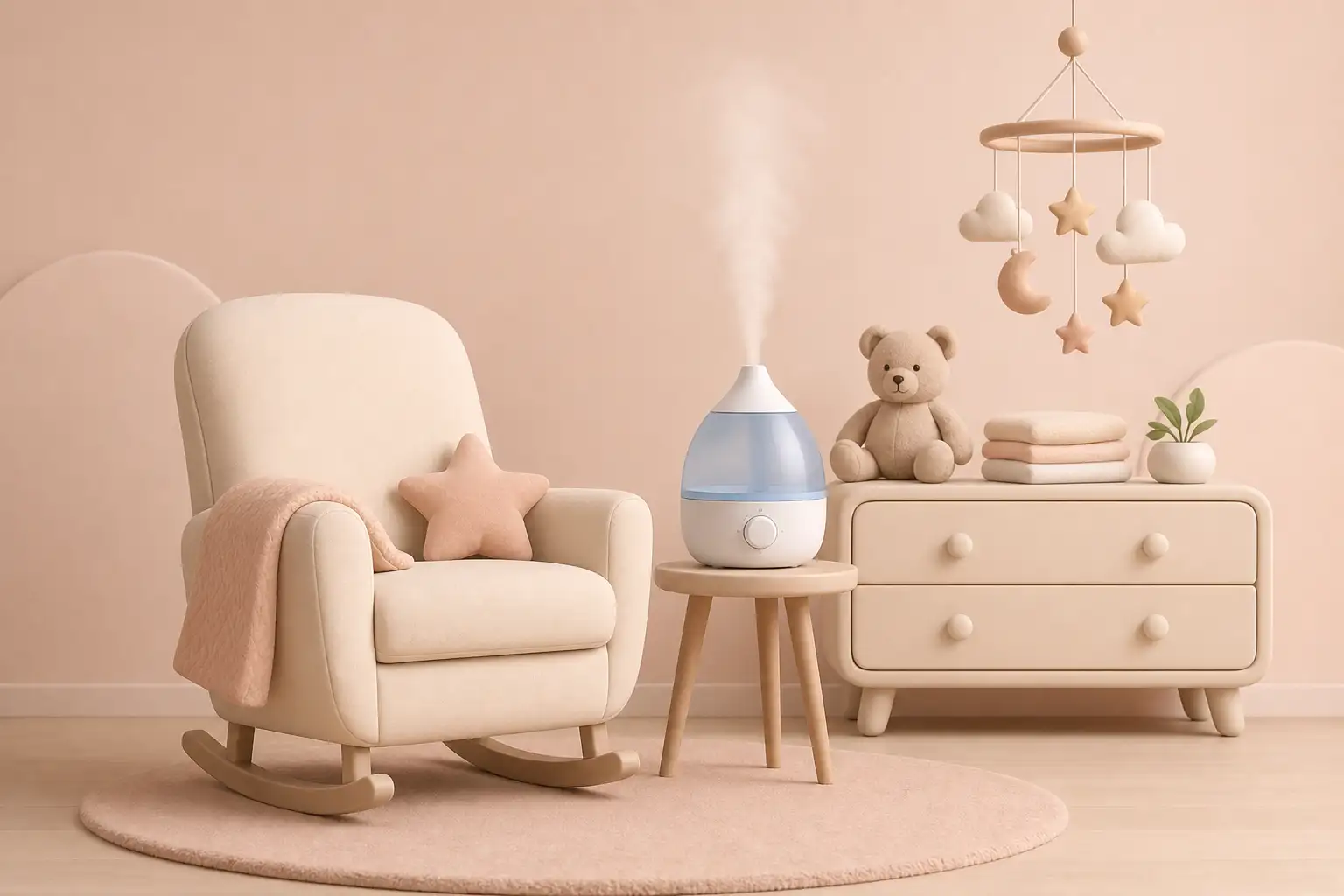
Best Humidifiers for Baby's Nursery: Cool Mist Wins
A humidifier in the nursery isn't a luxury, it's genuinely useful. Dry air (especially in winter with the heater running) dries out baby's nasal passages, worsens eczema, and makes coughs more persistent. Adding moisture to the air helps with all of it. But not all humidifiers are equal, and a dirty one is worse than no humidifier at all.
Cool Mist vs. Warm Mist
**Always cool mist for babies.** The AAP recommends cool mist humidifiers for children's rooms because warm mist humidifiers heat water to create steam, which is a burn risk if the unit tips over or a toddler gets too close. Cool mist is just as effective at adding moisture to the air without the safety concern.
Within cool mist, you have two types:
**Evaporative** humidifiers use a fan to blow air through a wet wick filter. They're self-regulating (they can't over-humidify) and quieter than ultrasonic models. The wick filter needs replacing every 1 to 2 months ($8 to $15 per filter).
**Ultrasonic** humidifiers vibrate water at high frequency to create a fine mist. They're very quiet, have no filters to replace, and use less energy. But they can over-humidify if you set them too high, and if you use tap water, they can disperse mineral dust (that white residue you see on furniture).
Our Top Picks
**Honeywell HCM-350 ($55)** is our top evaporative pick. It's quiet, easy to clean (the tank opening is wide enough to fit your hand in), and the evaporative design means no white dust and no over-humidifying. The filter lasts about 2 months. It's not the prettiest appliance, but it works reliably.
**Crane Drop Shape ($40)** is the popular ultrasonic option. It looks cute in a nursery, it's very quiet, and it runs for about 24 hours on a full tank. Use distilled water to avoid mineral dust. The 1-gallon tank is manageable for small to medium nurseries.
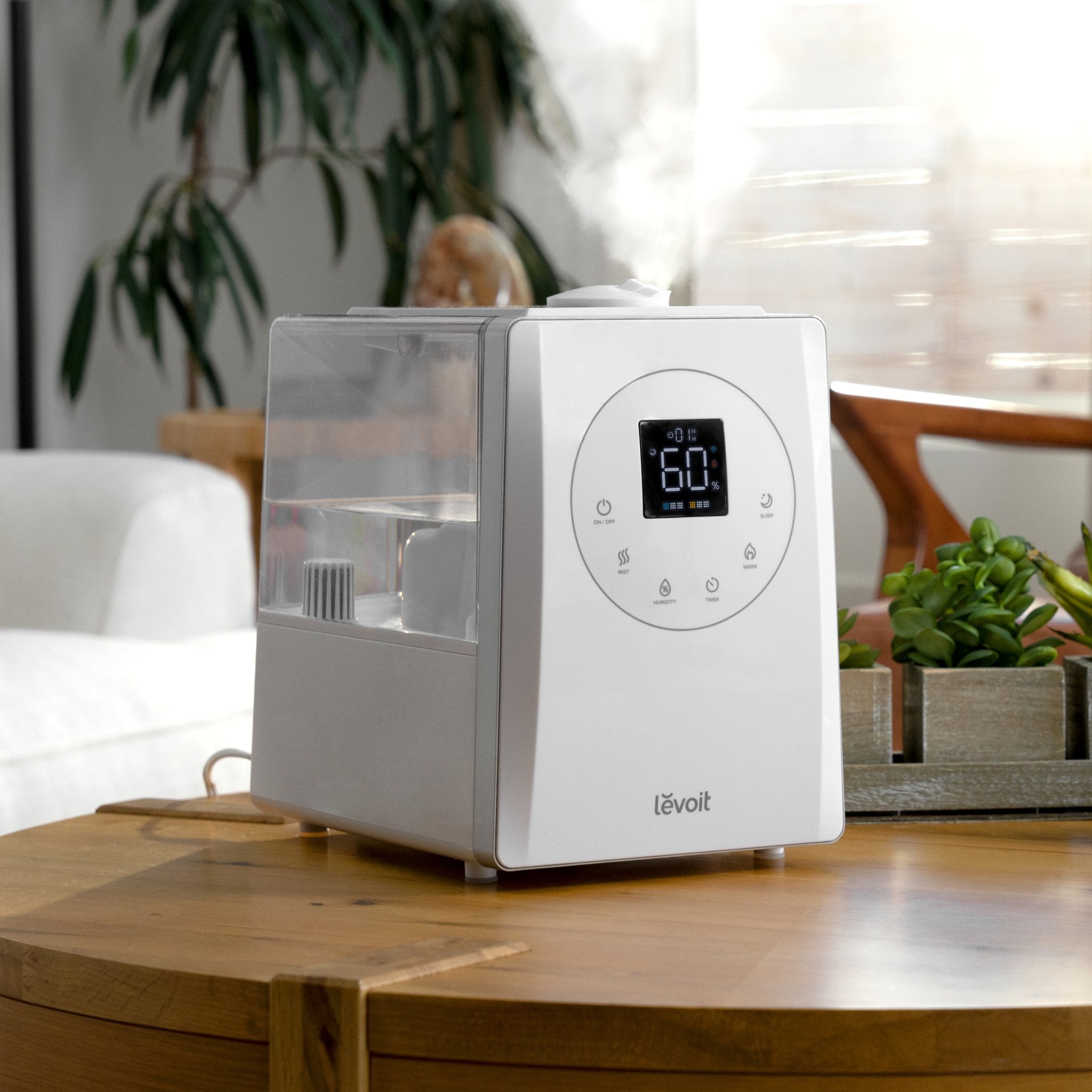
**Levoit LV600S ($70)** is the premium pick with smart home integration. It has a built-in hygrometer that auto-adjusts output to maintain your target humidity. You can control it from your phone, which means no walking into the nursery to adjust settings. It handles rooms up to 753 sq ft, so it works even in larger spaces.
Maintenance Is Everything
A humidifier that isn't cleaned regularly grows mold and bacteria, then blows those into the air your baby breathes. That's worse than dry air.
**Clean every 3 days.** Empty the tank, rinse with water, and wipe down the interior. Once a week, disinfect with a diluted white vinegar solution (1 tablespoon vinegar per cup of water). Rinse thoroughly after disinfecting.
**Replace filters on schedule.** For evaporative models, a gunky filter reduces performance and can harbor bacteria. Don't stretch filter life beyond what the manufacturer recommends.
**Use distilled water in ultrasonic models.** Tap water contains minerals that the ultrasonic mechanism disperses into the air as white dust. Distilled water eliminates this problem.
**Empty and dry it when not in use.** Standing water grows things. If you're done using it for the season, clean it, dry it completely, and store it.
Ideal Humidity Level
Keep nursery humidity between 40% and 60%. Below 40%, air is too dry. Above 60%, you risk mold growth. A cheap hygrometer ($8 to $10) tells you the current level. Some humidifiers have built-in hygrometers, which is convenient.
Placement
Place the humidifier on a flat, elevated surface (dresser or nightstand) at least 3 feet from the crib. The mist shouldn't blow directly on baby. Point it toward the center of the room. Make sure the cord is secured and out of reach, especially once baby becomes mobile.